

전시명 Exhibition Title
SEA BRIDGES 2025: 바다를 건너는 전통과 감성의 대화 SEA BRIDGES 2025
전시 기간 Exhibition Period
2025.09.03(수) – 2026.10.31(금) 2025.09.03 – 2026.10.31
전시 장소 Venue
온지음 ONJIUM
참여공방 Participating Studios
기획실Planning Dept. 기획실Planning Dept.
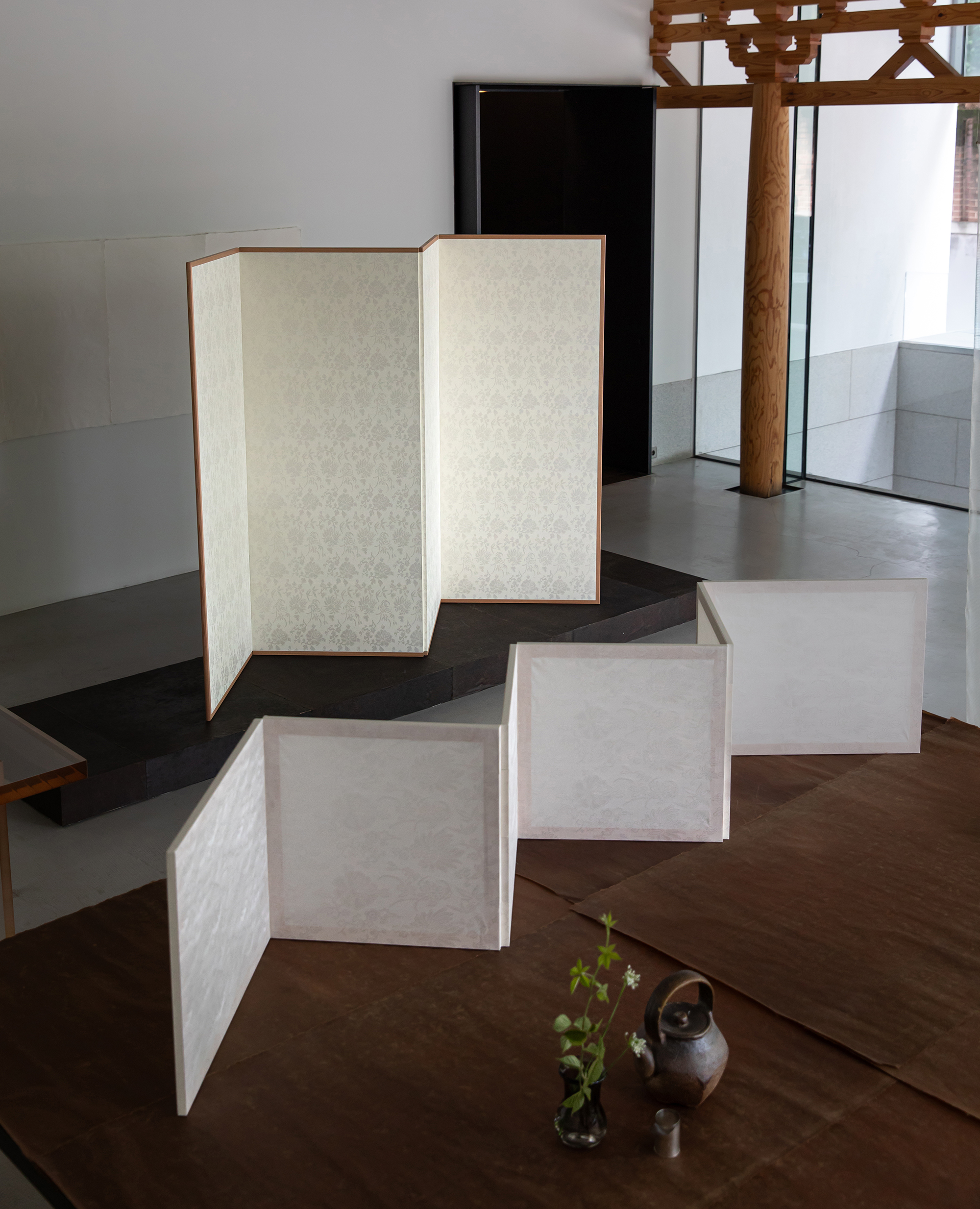
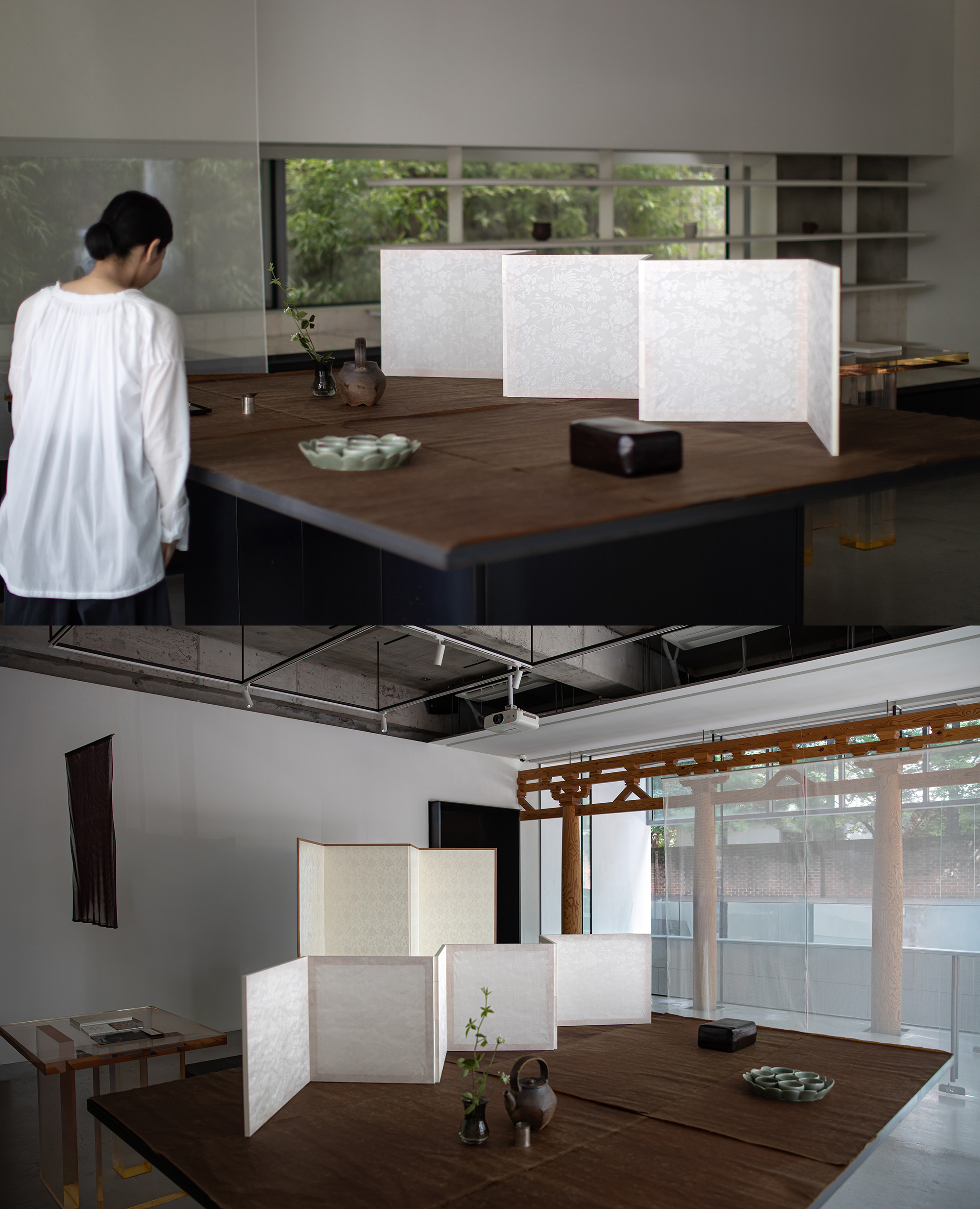
《SEA BRIDGES: 바다를 건너는 전통과 감성의 대화》는 온지음과 일본의 비영리단체 TOMORROW가 공동 기획한 프로젝트로, 음식과 공예를 매개로 한국과 일본의 전통 기술과 미감을 교류하는 자리다. 해양을 통한 한일 문화 교류의 거점이었던 교탄고 지역을 출발점으로, 서로 다른 자연환경과 생활문화 속에서 이어져 온 전통이 오늘의 만남을 통해 새롭게 확장되는 가능성을 탐구한다.프로젝트는 2025년 6월 일본 교탄고의 해안 마을에 자리한 레스토랑 나와야(Nawaya)에서 선보인 협업 프로그램 〈Our Future Meal 2030〉으로 시작되었다. 양국의 전통 식재료와 조리법, 지역성을 바탕으로 음식에 담긴 감각과 지혜를 나누며, 미래의 식문화를 함께 모색하였다.공예 협업에서는 교토의 전통 목판 인쇄 기법인 카라카미(唐紙) 장인 코 카도(Koh Kado)와 함께 조선 19세기 직물에 나타나는 ‘사군자와 모란무늬’를 재현하였다. 이를 통해 제작한 문양지를 바탕으로 한국과 일본의 배첩장인들이 각각 병풍을 완성하였다. 두 병풍은 하나의 문양이 서로 다른 재료와 제작 방식, 손길을 만나 각기 다른 조형적 결과로 이어지는 과정을 보여준다. 전시는 9월 3일부터 10월 31일까지 온지음 사옥 1층에서 선보인다.전시의 마지막 날에는 교탄고에서 시작된 〈Our Future Meal 2030〉이 온지음 레스토랑으로 이어진다. 같은 질문을 서로 다른 땅의 재료와 기후, 풍경 속에서 다시 살피는 이번 프로젝트는, 전통을 이어온 기술과 감각이 동시대의 대화를 통해 미래로 확장되는 과정을 음식과 공예로 드러낸다.
"SEA BRIDGES 2025" is a project jointly conceived by Onjium and the Japanese nonprofit organisation TOMORROW, bringing Korean and Japanese craft traditions and aesthetics into dialogue through food and craft. Taking Kyotango, historically a hub of maritime cultural exchange between Korea and Japan, as its starting point, the project explores how traditions shaped by different natural environments and ways of living can find new possibilities through encounters today.The project began in June 2025 with Our Future Meal 2030, a collaborative programme presented at Nawaya, a restaurant in a coastal village in Kyotango. Drawing on traditional ingredients, cooking methods, and the distinctive character of each region, the collaboration shared the sensibilities and knowledge embodied in food while considering the future of culinary culture.For the craft collaboration, Koh Kado, a Kyoto artisan specialising in karakami (唐紙), traditional woodblock-printed decorative paper, worked with the project to recreate a pattern of the Four Gentlemen and peonies found in nineteenth-century Joseon textiles. Using the resulting patterned paper, mounting artisans in Korea and Japan each created a folding screen. The two screens reveal how a shared pattern takes on different forms through distinct materials, methods, and makers’ hands.On the exhibition’s final day, Our Future Meal 2030 continues its journey from Kyotango to Onjium Restaurant in Seoul. Revisiting the same question through the ingredients, climate, and landscape of another place, the project uses food and craft to explore how inherited skills and sensibilities can carry forward into the future through contemporary dialogue.