

프로젝트명 Project Title
국립중앙박물관 서화관 리뉴얼 공간 조성 및 목방석과 목보료 제작 Furnishing the 'Calligraphy and Painting' Section — National Museum of Korea
연도 Year
20262026 20262026
참여공방 Participating Studios
옷공방, 집공방Clothing Studio, Housing Studio 옷공방, 집공방Clothing Studio, Housing Studio
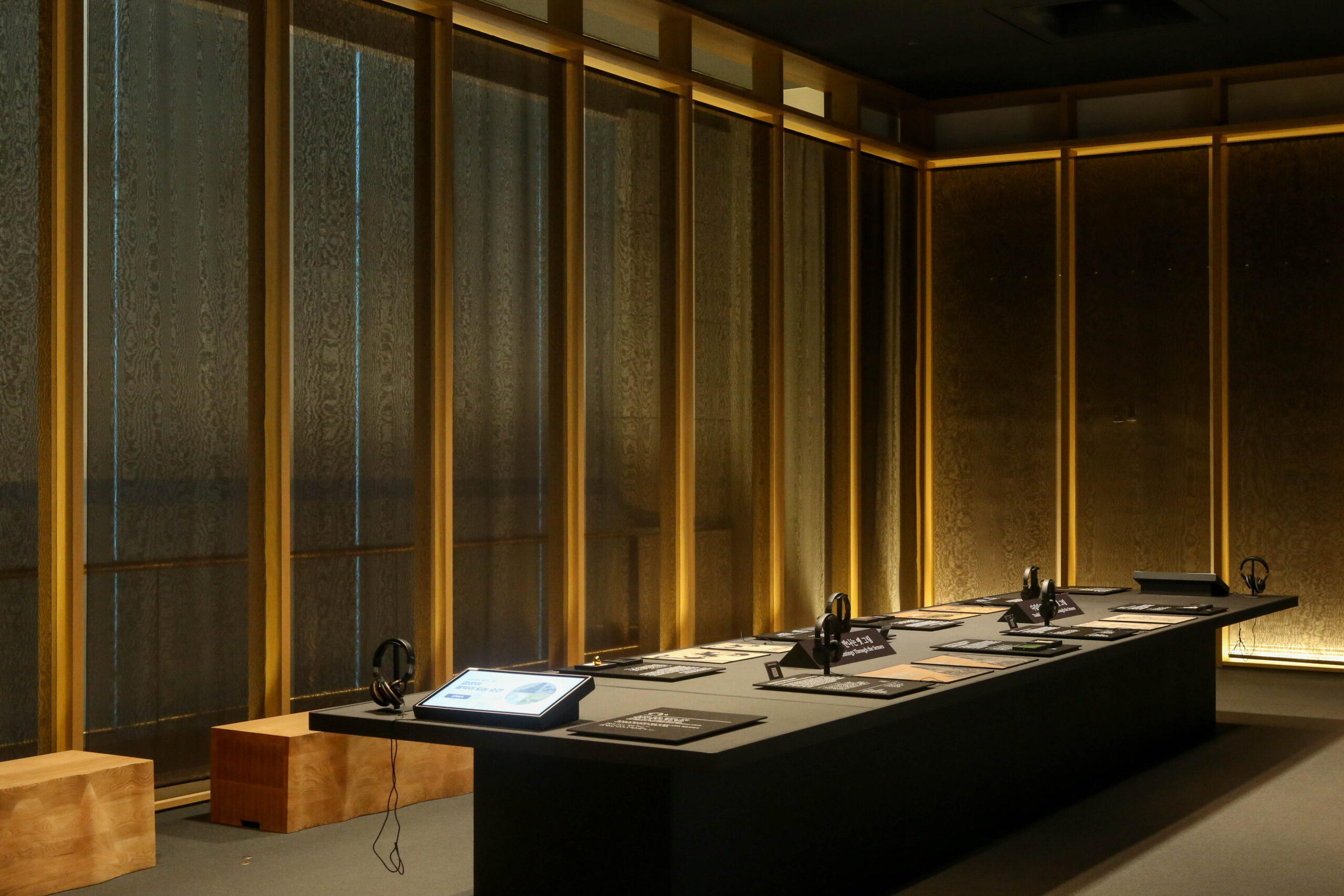
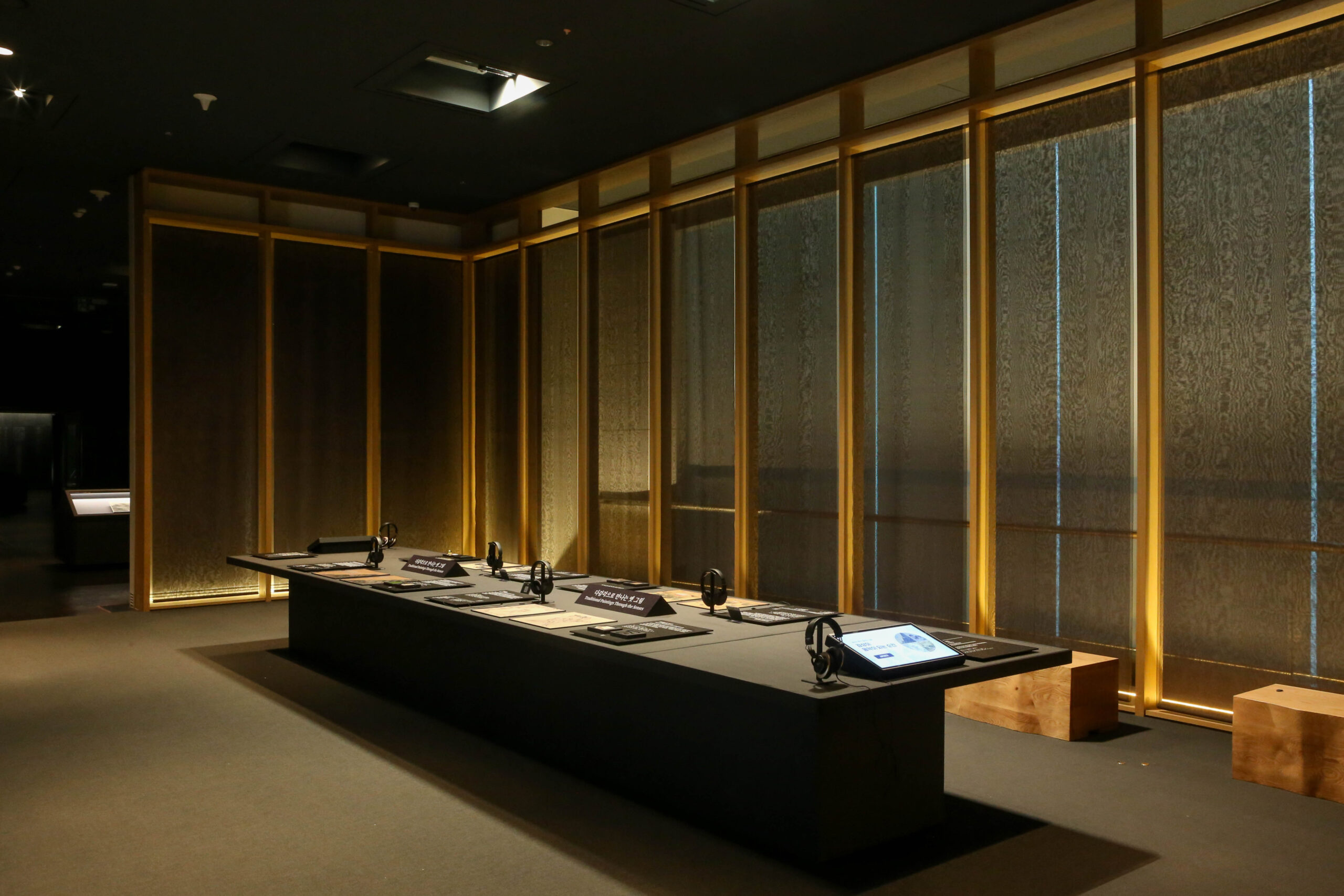
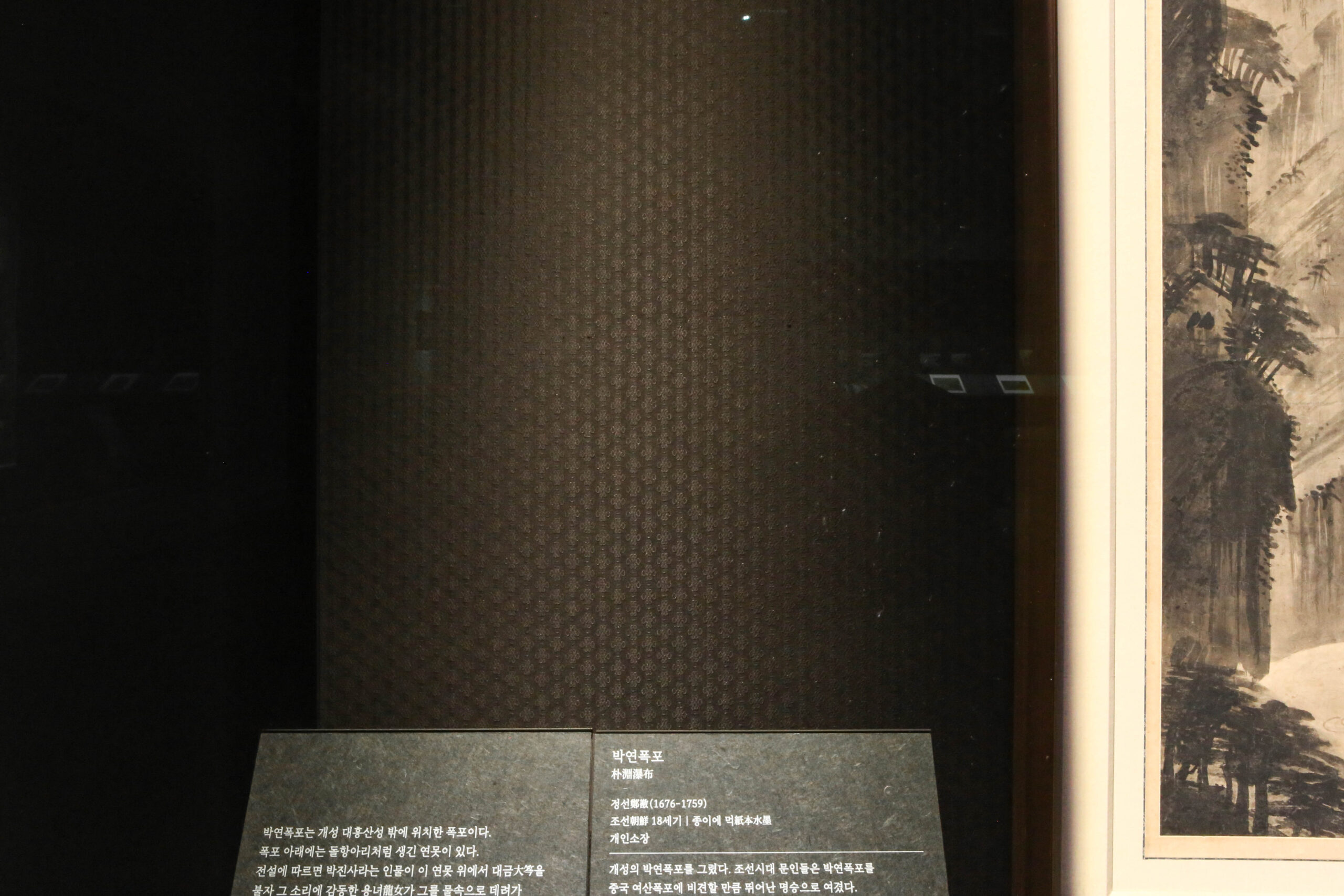
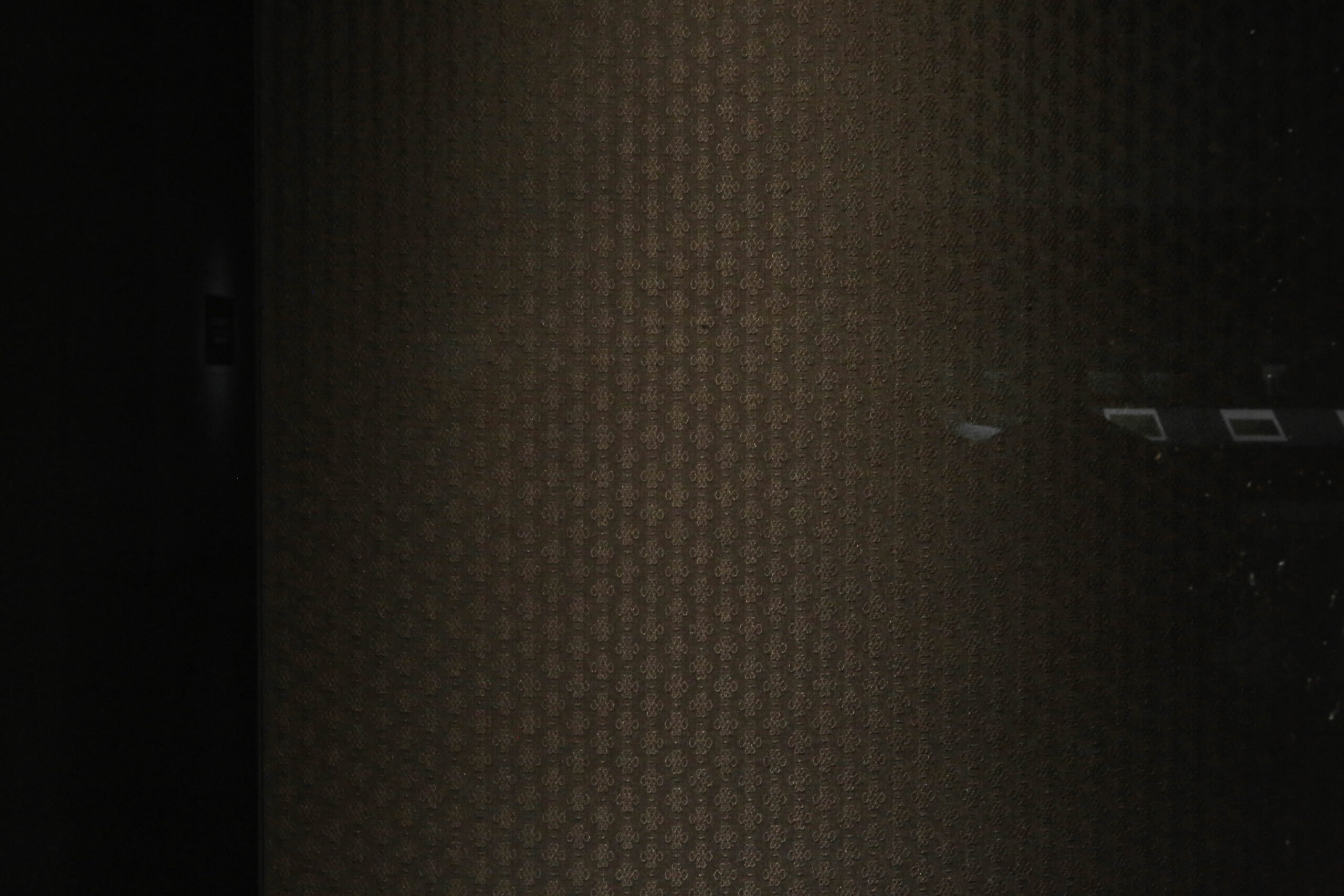
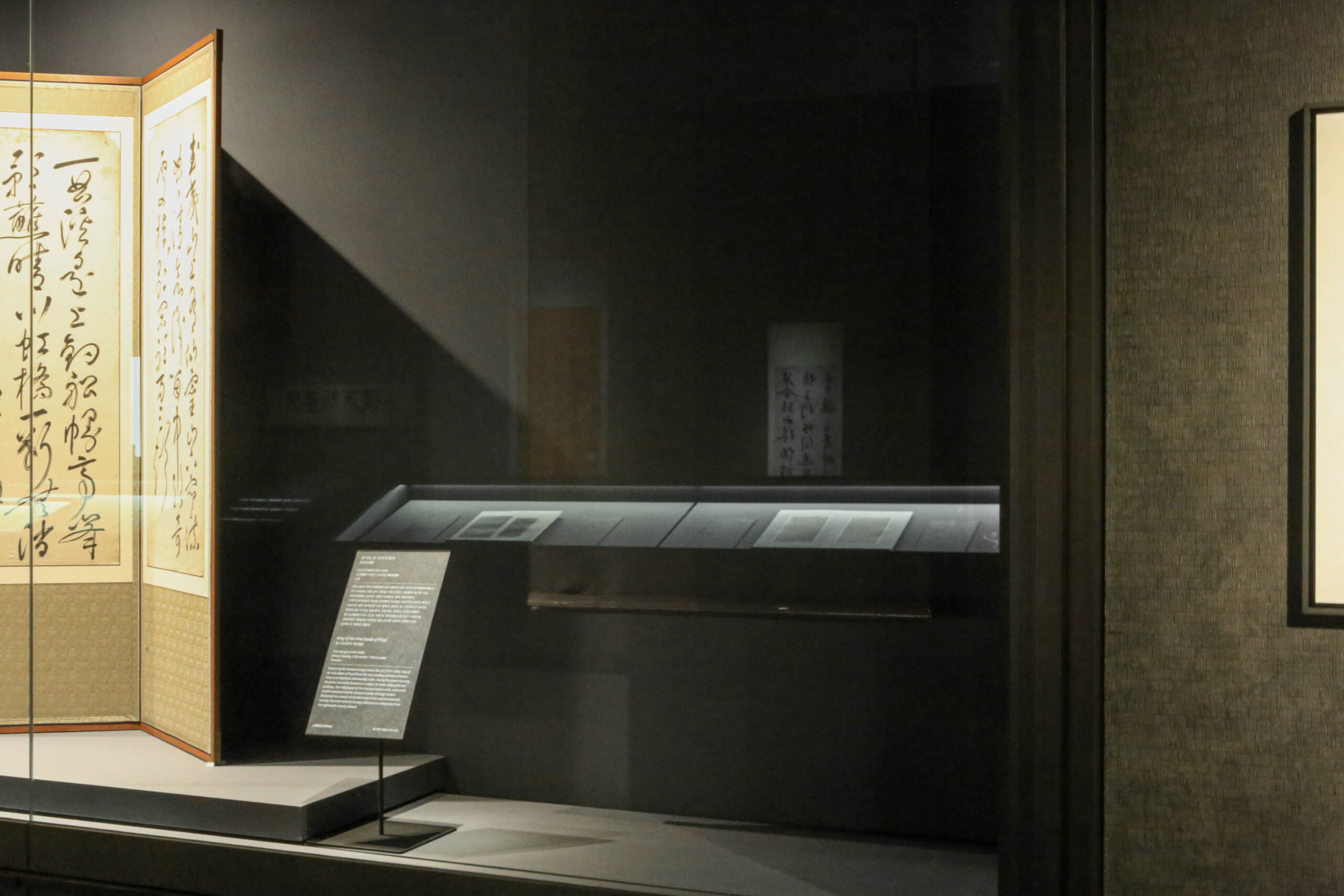
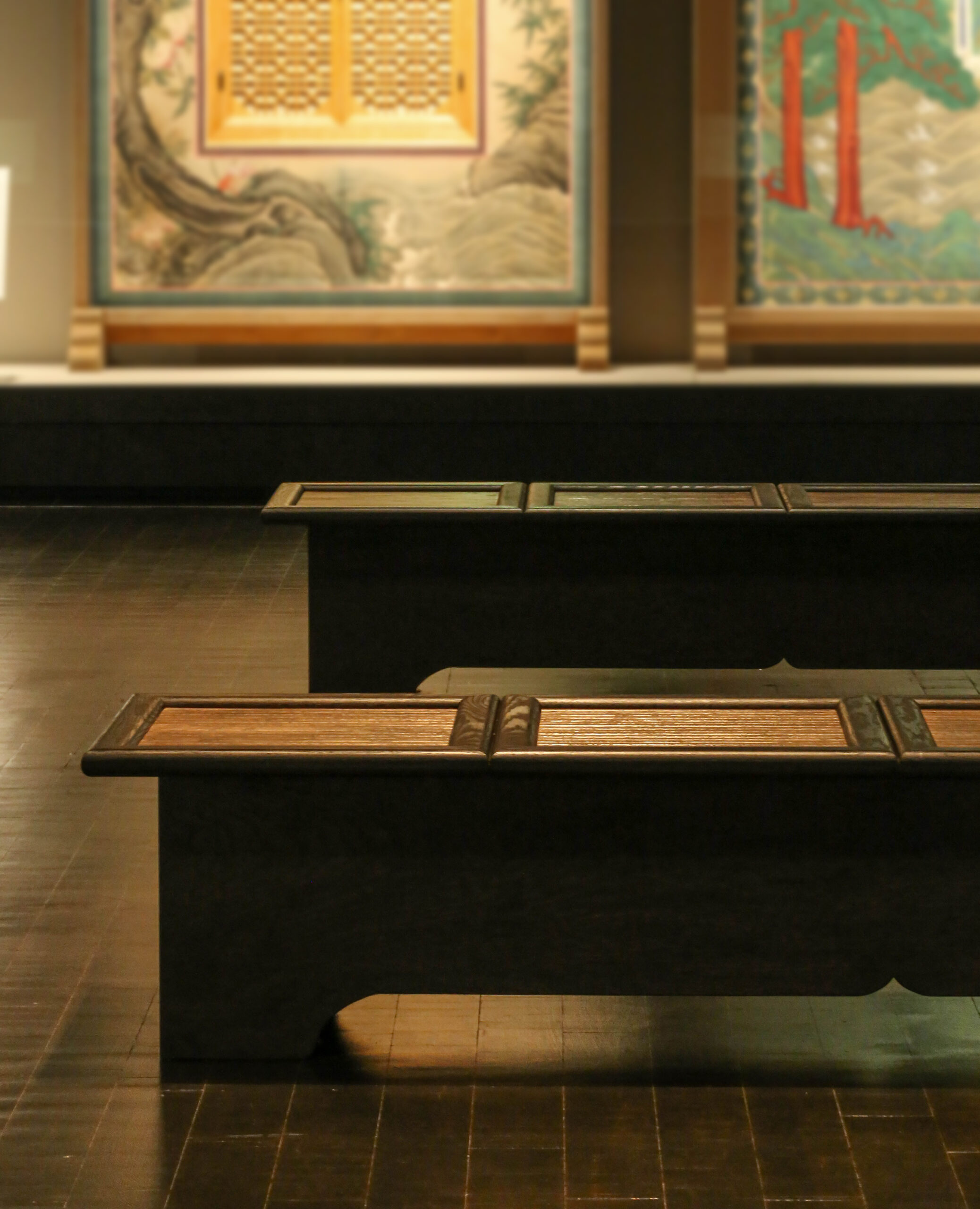
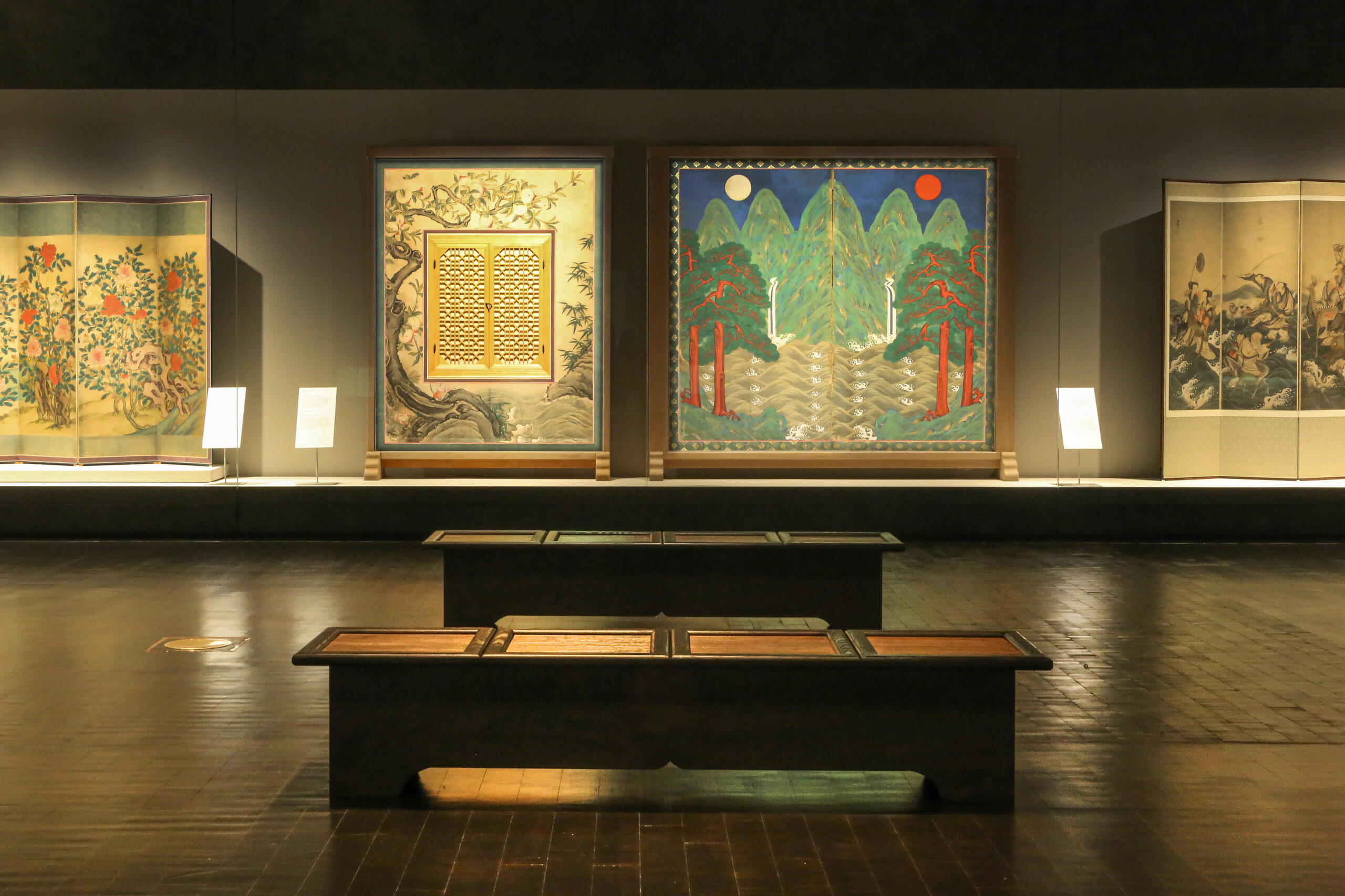
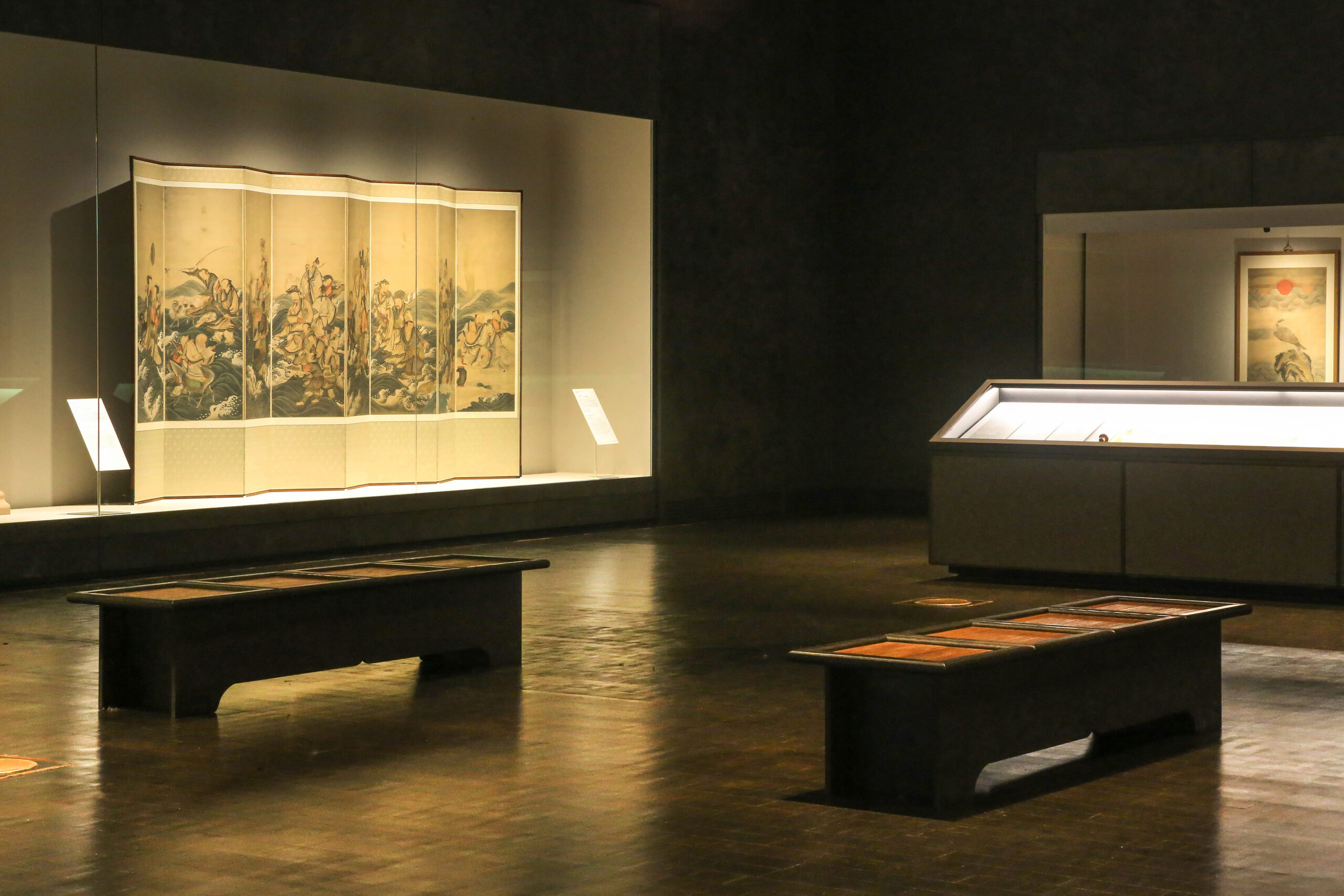
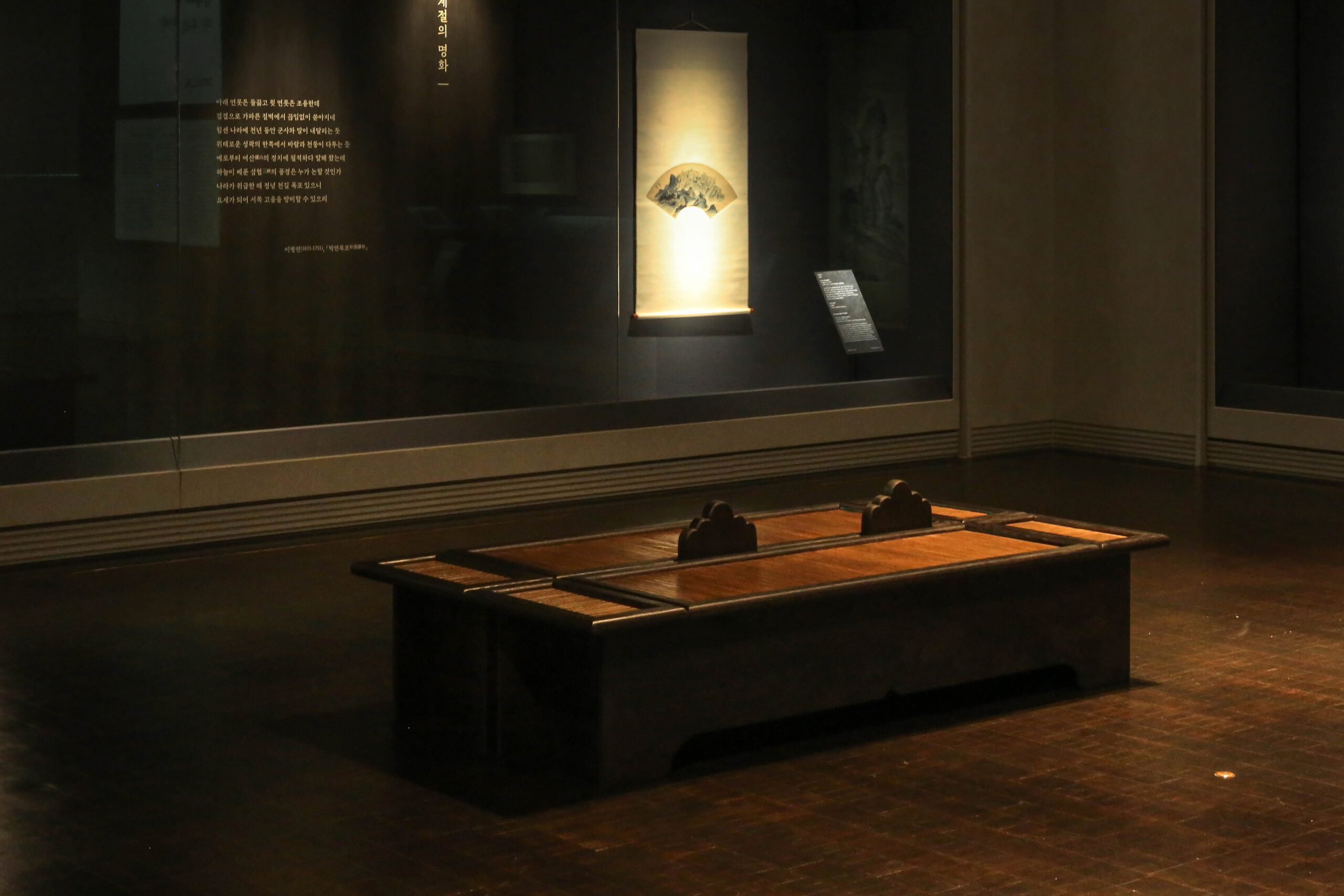
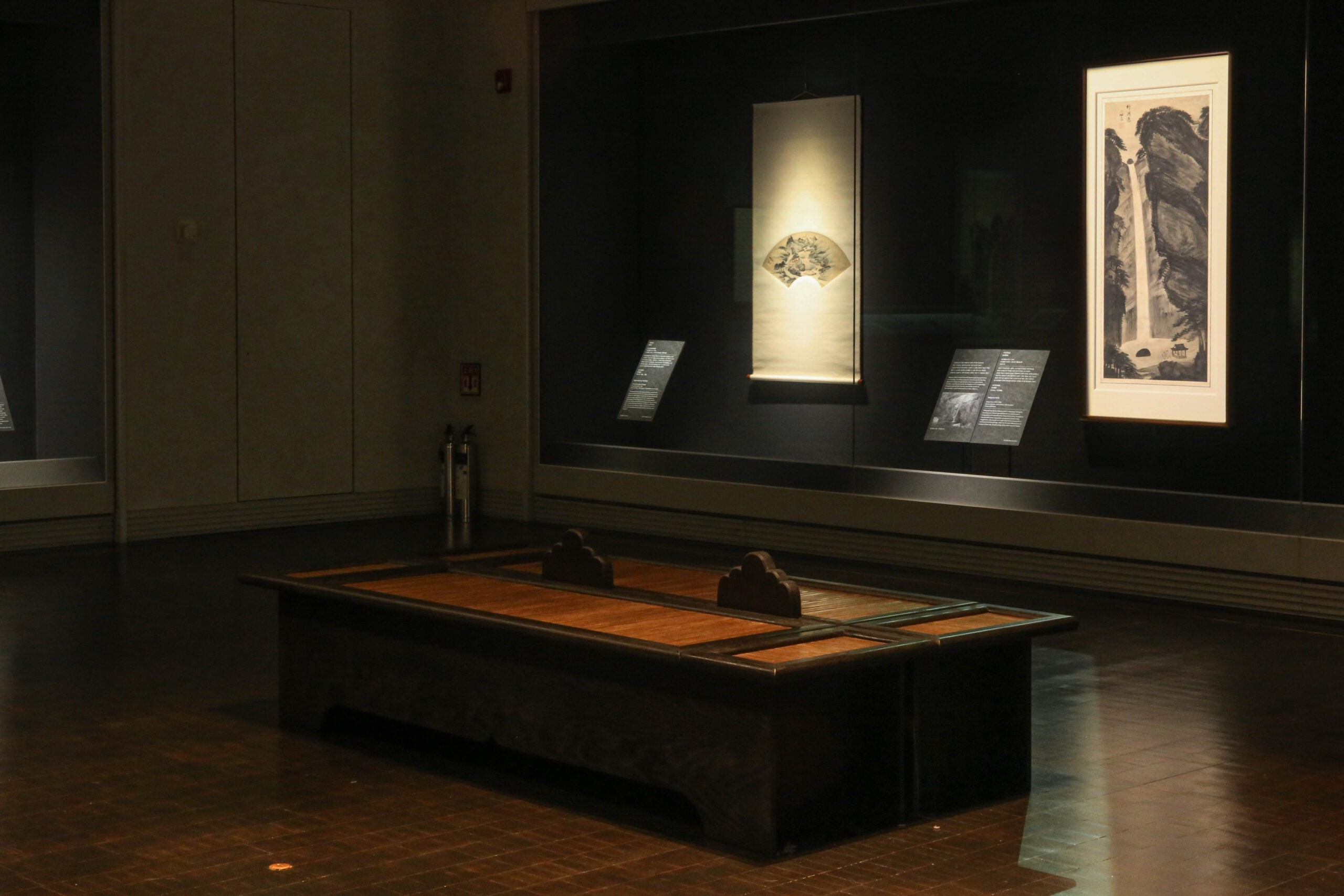
옷공방과 집공방은 국립중앙박물관 상설전시관 2층 서화관의 리뉴얼 개관에 맞추어, 전시 공간의 직물 구성과 관람 가구 제작을 함께 맡았다.옷공방은 전시장과 휴게 공간을 구분하는 '발'을 제작하였다. 은조사를 먹색으로 염색하여 만든 발은 공간을 완전히 가리지 않으면서도 부드럽게 경계를 짓는 요소로 기능하며, 관람 동선 사이에 자연스러운 여백을 형성한다. 보물 〈초서로 쓴 무이구곡가〉가 전시된 공간의 양옆에 설치된 발은 작품과 관람자 사이에 고요하고 차분한 깊이를 더한다.전시 공간의 벽면에는 마름무늬 숙수를 배접해 도배로 사용하였다. 정선의 〈박연폭포〉와 조영석의 〈눈길을 헤치고 벗을 찾아간다〉가 걸린 벽면에 적용된 숙수는 문양의 색조를 깊고 절제된 톤으로 조율하여, 회화가 공간 속에서 자연스럽게 드러나도록 하였다.집공방은 전시장 안에서 작품을 감상하며 머무를 수 있는 긴 의자 두 종을 제작하였다. 조선시대 좌구인 방석과 보료에서 착안한 '목방석'과 '목보료'로, 바닥에 앉던 전통의 형태를 오늘의 전시 환경에 맞는 입식 가구로 풀어냈다.목방석은 여러 사람이 함께 앉으면서도 개별 좌석의 감각을 살려 자연스러운 간격을 형성하고, 목보료는 장침과 안석의 형상을 현대적으로 재해석한 의자로, 관람의 흐름 속에서 잠시 머무를 수 있는 자리로 기능한다. 앉는 부분에는 전통 창살의 쇠시리 기법인 쌍사모를 적용해 가볍고 시원한 감각을 살렸으며, 전체를 원목에 어두운 옻칠로 마감하여 전통 가구가 지닌 묵직하고 단단한 분위기를 구현하였다.
Clothing Studio and Housing Studio contributed textile elements and gallery seating to the renewal of the Calligraphy and Painting Gallery on the second floor of the National Museum of Korea’s Permanent Exhibition Hall.The Clothing Studio created fabric screens to distinguish the exhibition areas from the rest spaces. Made from eunjosa(은조사) silk dyed an ink-black shade, the screens establish gentle boundaries without fully obscuring the spaces beyond, creating moments of openness along the visitor route.The studio also lined selected gallery walls with paper-backed suksu(숙수), a silk fabric with a diamond pattern. Used behind Jeong Seon(정선)’s 'Bakyeon Falls(박연폭포)' and Jo Yeong-seok(조영석)’s Visiting a 'Friend through the Snow', the fabric’s pattern was rendered in deep, restrained tones, allowing the paintings to emerge naturally within the space.The Housing Studio designed two types of benches where visitors can pause and contemplate the works. Named Mokbangseok(목방석) and Mokboryo(목보료), they draw on the bangseok(방석) and boryo(보료)—cushions and padded floor mats used for seated living during the Joseon period—translating their forms into raised seating suited to a contemporary gallery.Mokbangseok(목방석) accommodates several visitors while preserving a sense of individual seats and a comfortable distance between them. Mokboryo(목보료) reinterprets the forms of traditional long pillows and backrests, offering a place to rest along the exhibition route. The seats incorporate ssangsamo(쌍사모), a paired moulding profile used in traditional wooden window latticework, lending visual lightness and an airy quality. Crafted from solid wood and finished with dark ottchil(옻칠) lacquer, both designs convey the weight and solidity of traditional Korean furniture.