

프로젝트명 Project Title
스미소니언 국립아시아미술관 〈Chuseok Family Festival〉 참여 Participation in the Chuseok Family Festival — Smithsonian’s National Museum of Asian Art
연도 Year
20232023 20232023
참여공방 Participating Studios
맛공방Food Studio 맛공방Food Studio
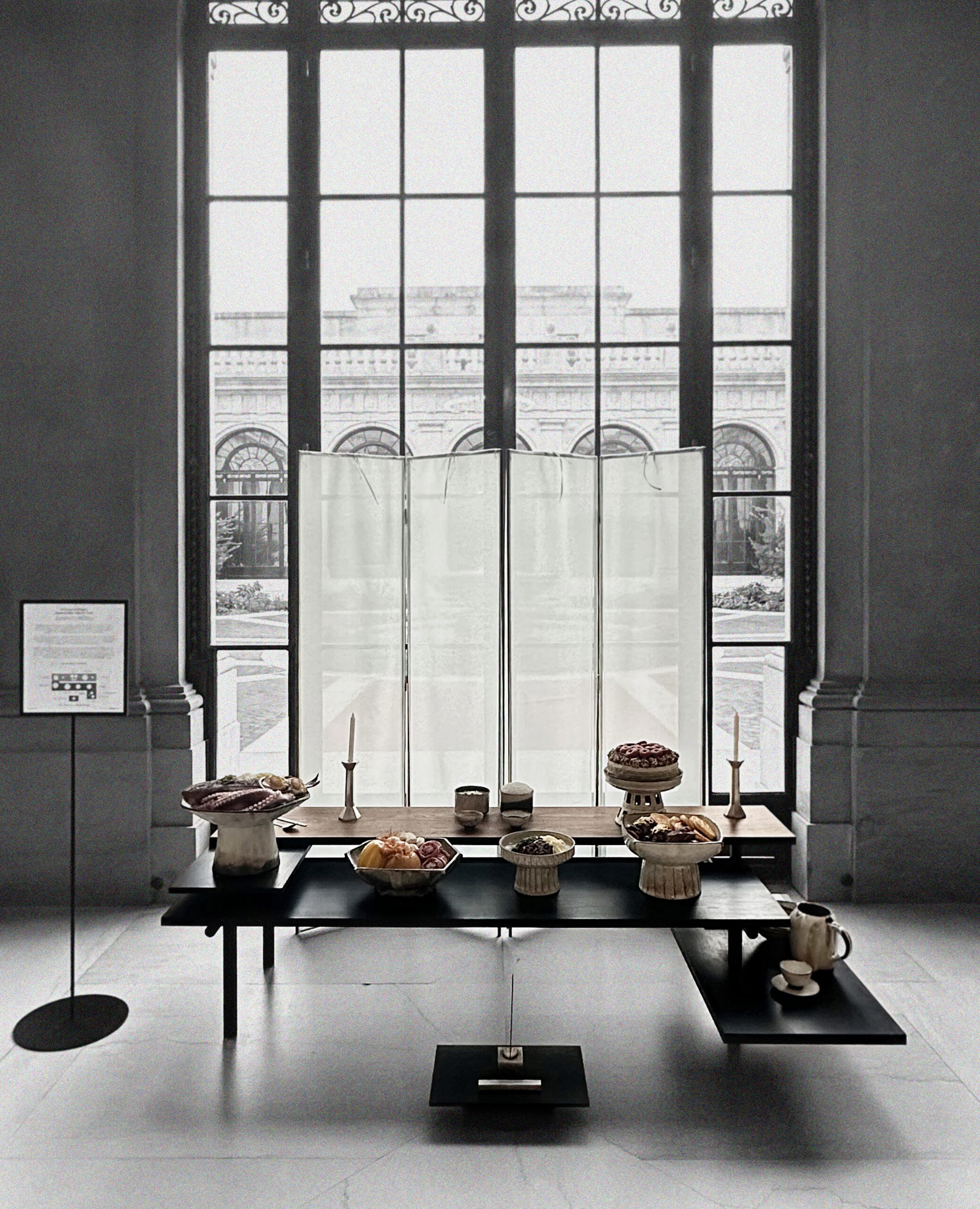
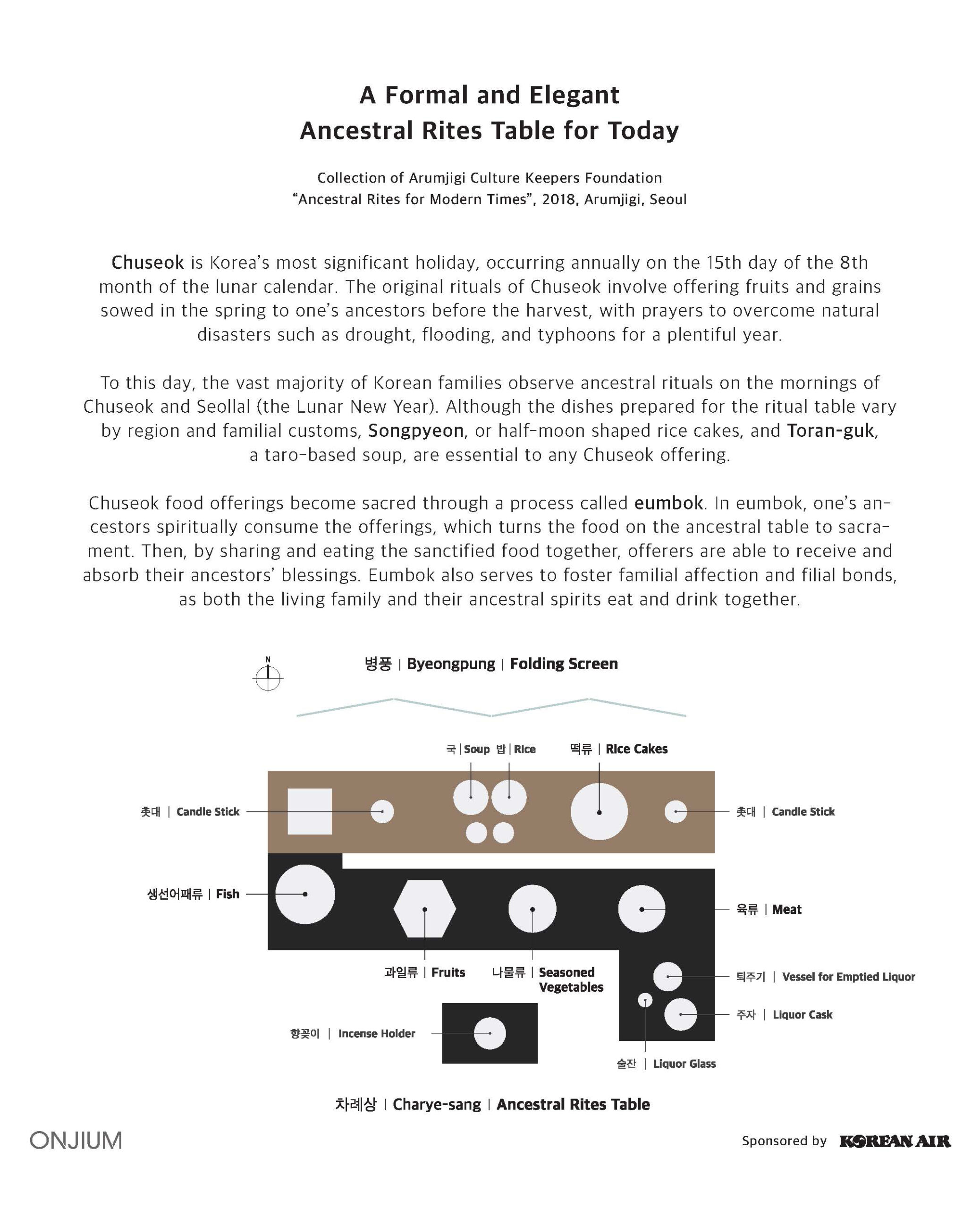
스미소니언 국립아시아미술관(National Museum of Asian Art)의 초청으로 열린 에서 맛공방은 한국의 추석 문화를 소개하는 차례상 전시로 참여하였다. 이번에 선보인 상차림은 2018 아름지기 기획전 《가가례: 집집마다 다른 제례의 풍경》에서 발표된 ‘현대 제사상’을 바탕으로, 전통 제례 문화의 정신을 유지하면서도 오늘의 생활 환경에 맞게 재구성한 제안이다.현대 제사상은 선조들의 제례 관습과 상차림의 의미를 면밀히 살피고, 과도한 장식이나 형식을 배제한 검박하고 절제된 미감을 중심으로 구성하였다. 이는 조상에 대한 예를 다하는 마음과 공동체적 기억을 이어가는 제례의 본질을 존중하는 동시에, 현대의 일상 속에서도 실천 가능한 방식으로 제례 문화를 재해석하고자 한 시도이다.은 한국의 대표 명절인 추석의 전통과 현재를 함께 소개하는 문화 프로그램으로, 한복 체험과 공연, 강연, 지역 커뮤니티 참여 프로그램 등 다양한 활동과 함께 진행되었다. 온지음의 차례상 전시는 이러한 맥락 속에서 한국 제례 문화의 상징성과 미감을 시각적으로 전달하며, 전통이 오늘의 삶 속에서 어떻게 새롭게 이해되고 실천될 수 있는지를 제안하는 하나의 사례로 자리한다.
At the invitation of the Smithsonian’s National Museum of Asian Art, Food Studio participated in the Chuseok(추석) Family Festival with a display of a charyesang(차례상), a table set for ancestral rites during Korean holidays, introducing Korea’s Chuseok traditions. The display was based on the 'Contemporary Ancestral Ritual Table' presented at Arumjigi’s 2018 exhibition, 'Gagarye(가가례): Ancestral Rites in Every Household.' It offered an approach adapted to contemporary living while preserving the spirit of traditional ancestral rites.The contemporary ritual table was developed through a close study of ancestral customs and the meanings behind the table setting. Its simple, restrained aesthetic avoided excessive decoration and formality. The approach respected the essence of ancestral rites—honoring ancestors and carrying forward shared memories—while reinterpreting these traditions in ways that could be practiced in everyday life today.The Chuseok Family Festival explored both traditional and contemporary ways of celebrating Chuseok, one of Korea’s major holidays, through activities including hanbok experiences, performances, lectures, and local community programs. Within this setting, Onjium’s display conveyed the symbolism and aesthetics of Korean ancestral rites, offering an example of how tradition can be understood anew and practiced in contemporary life.